
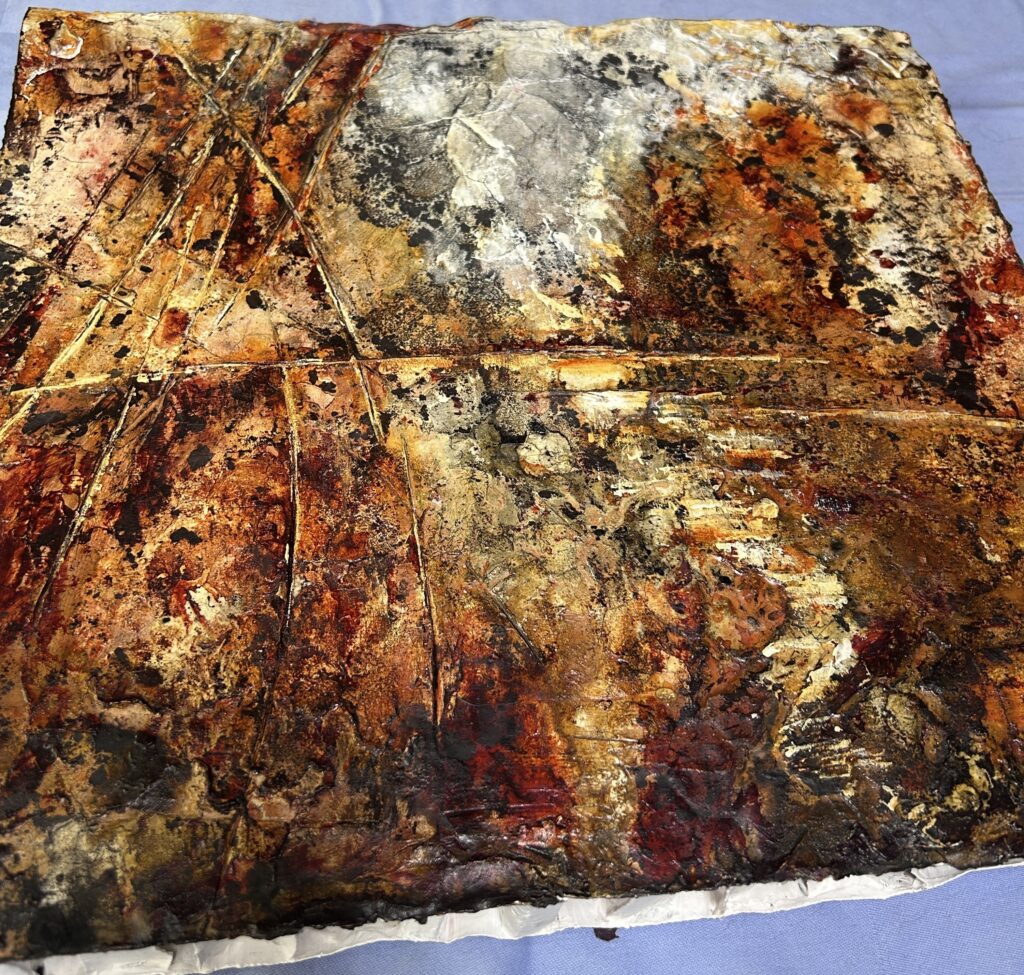
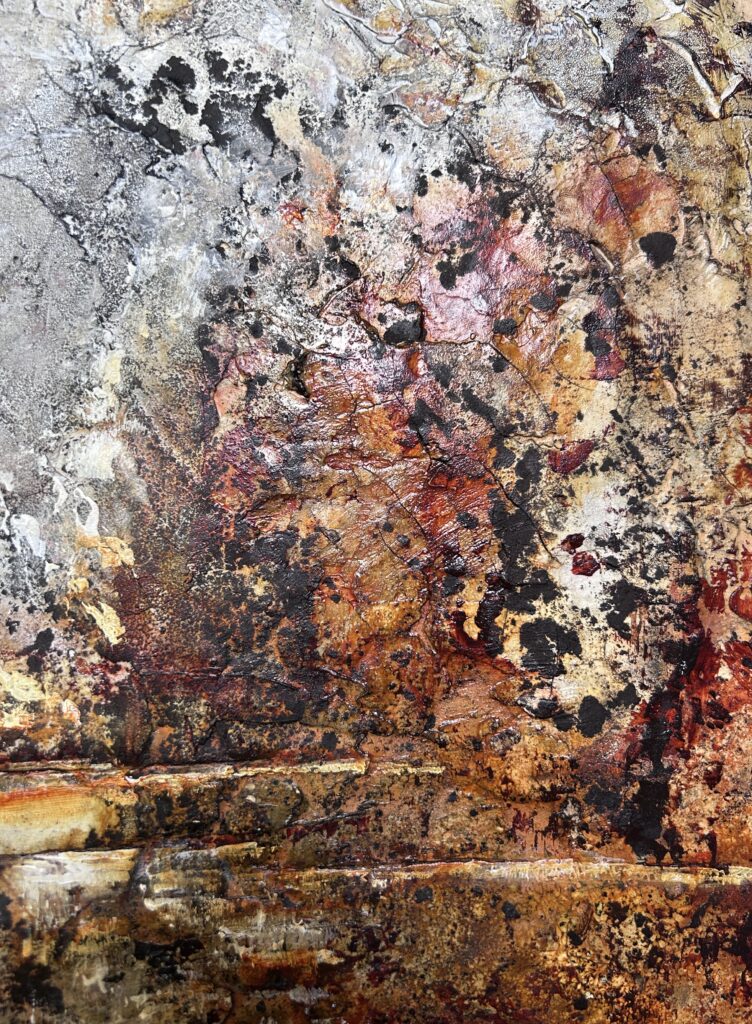
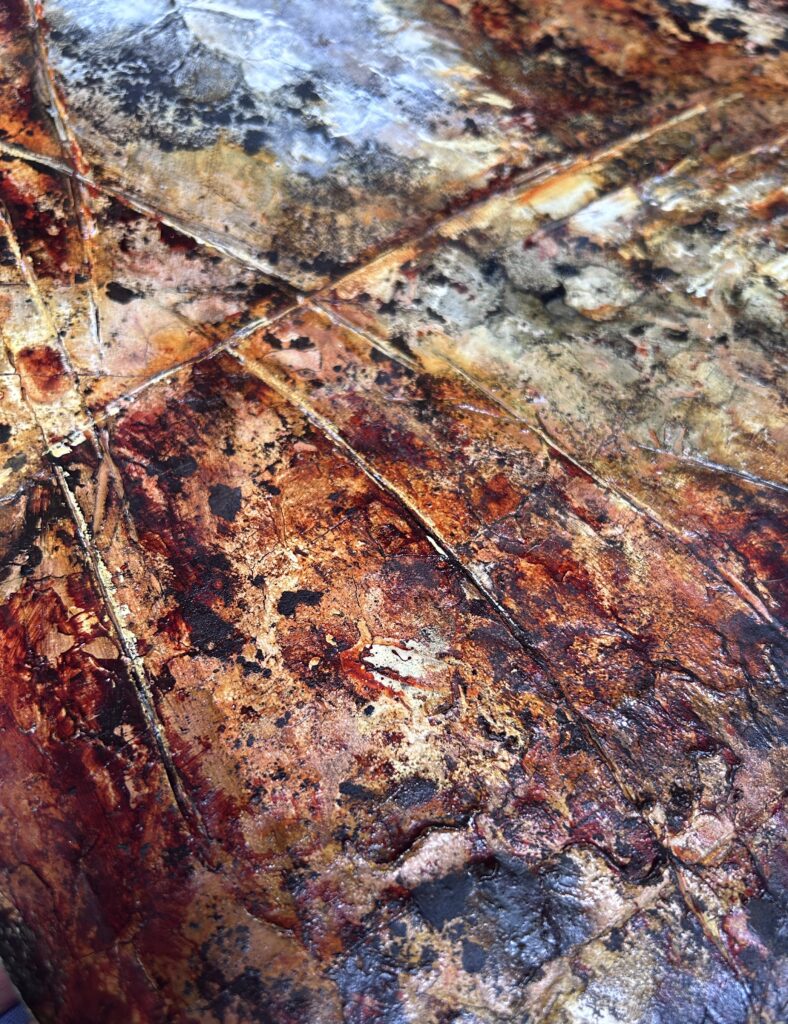
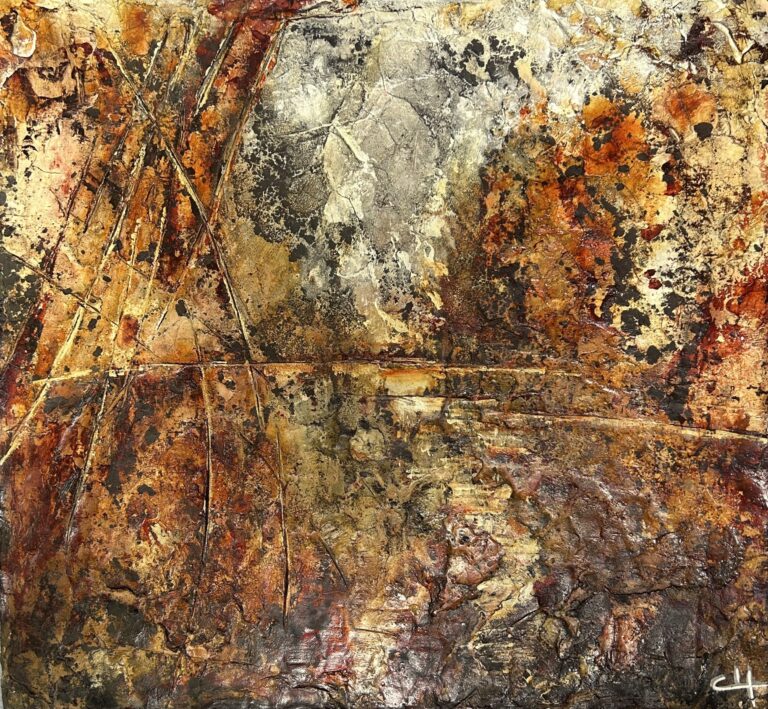
From Waste to Presence is a matter painting on cardboard created from reclaimed packaging material. What was once designed to protect and then be discarded becomes the foundation of a layered, tactile artwork. By choosing cardboard instead of canvas, the material itself becomes part of the narrative.
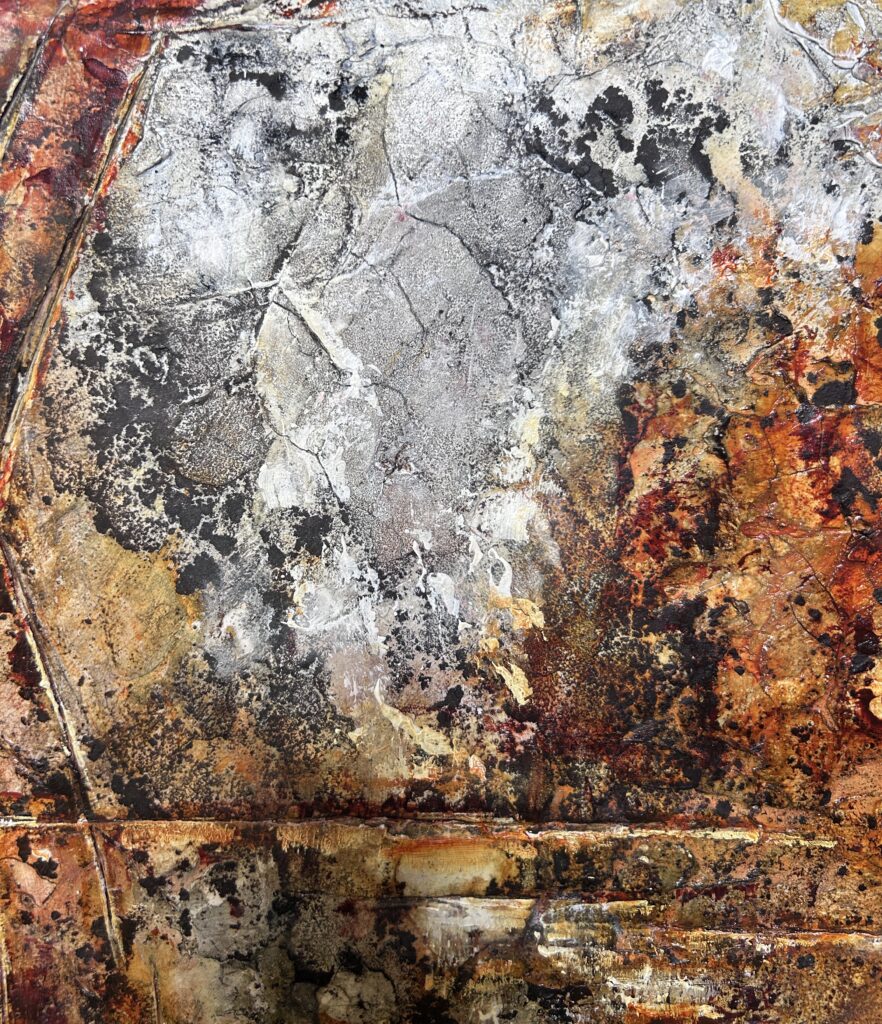
The work began as an experiment with sumpfkalk (lime plaster) and marble powder. This mineral mixture formed a dense, creamy surface that reacted unpredictably while drying. Under sunlight, the material developed a natural craquelé — cracks that were not forced, but emerged through tension and time. As a matter painting on cardboard, the piece balances fragility and strength within its structure.
The layered surface was built gradually using lime, marble powder, pigments, ink washes and bitumen. After the initial cracking appeared, a binder was applied to secure the fragile fragments while preserving their raw texture. The result is a surface that feels both geological and architectural.
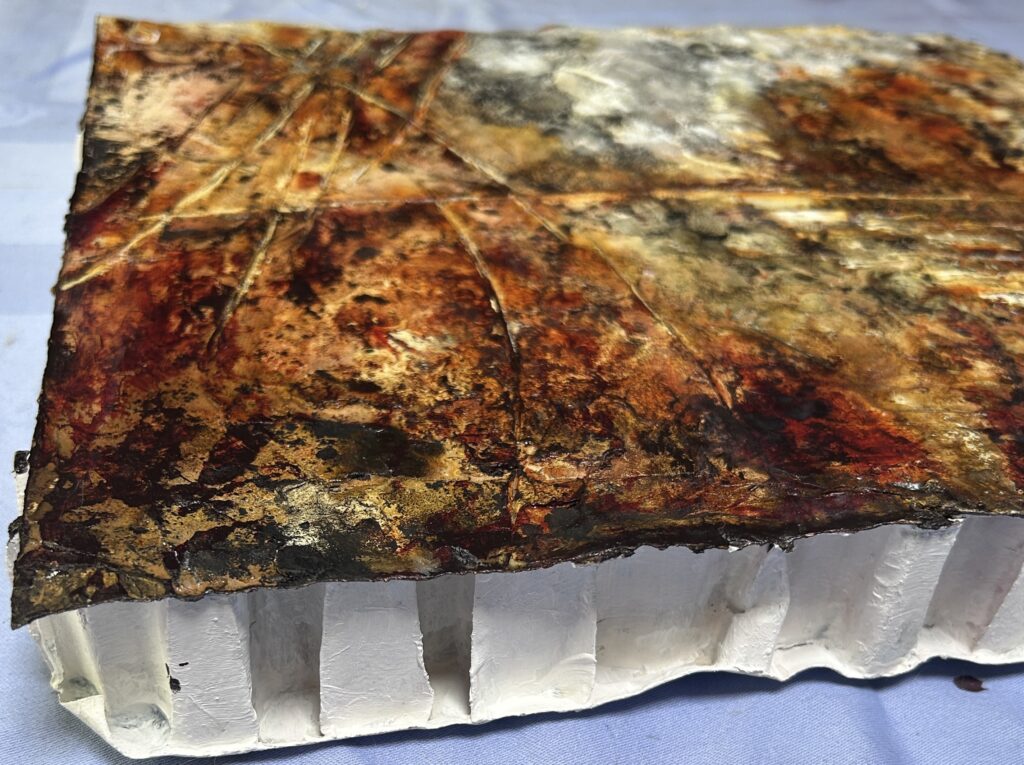
The visible air chambers within the cardboard remain part of the artwork. They reveal the construction beneath the surface and emphasize the transformation from packaging to presence. This matter painting on cardboard does not conceal its origin — it elevates it.
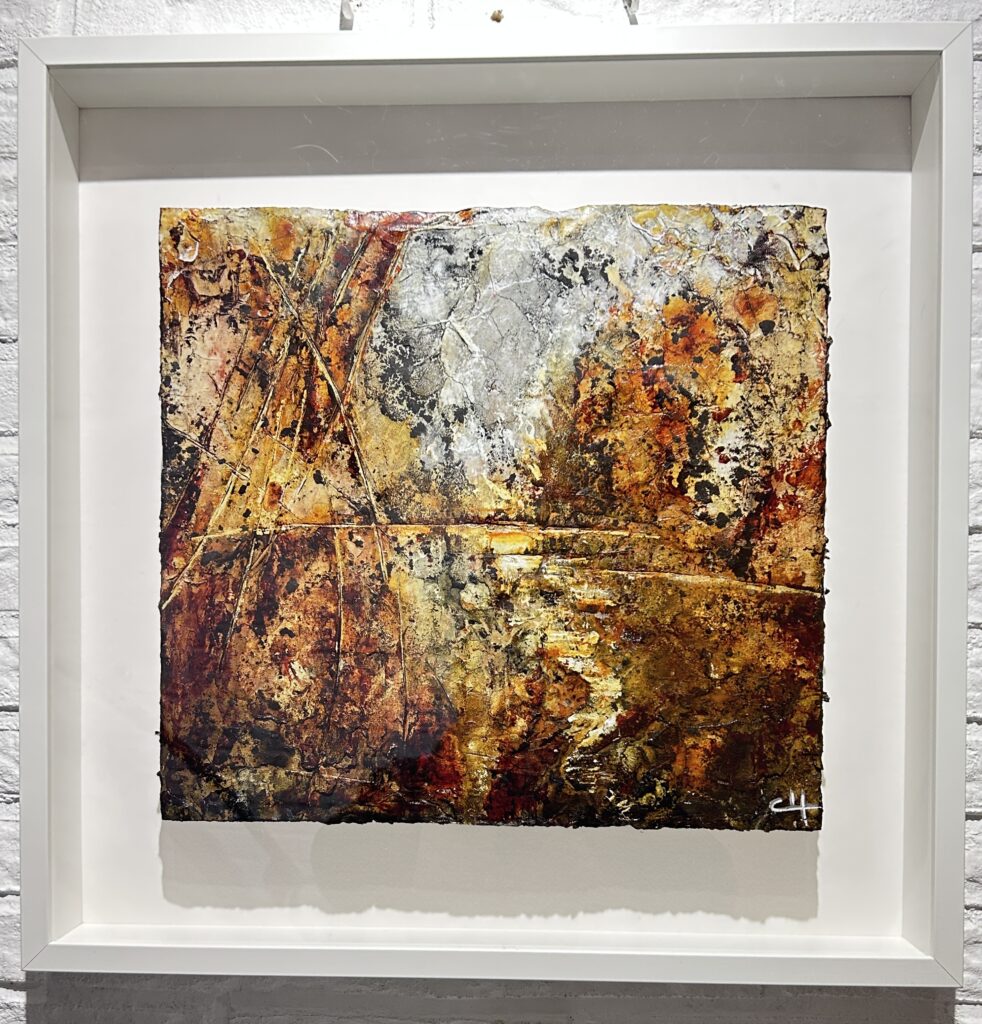
What began as waste material evolves into a composed and framed artwork. The white shadow frame does not hide the raw edges; instead, it gives them space. The contrast between rough material and refined presentation highlights the core idea of the work: transformation without erasure.
By working with reclaimed cardboard and mineral materials, the painting carries memory within its layers. From protection to exposure. From disposal to contribution.
This matter painting on cardboard invites the viewer to look closely — not only at the cracks and textures, but at the potential within overlooked materials.
From Waste to Presence is a matter painting on cardboard created from reclaimed packaging material. What was once designed to protect and then be discarded becomes the foundation of a layered, tactile artwork. By choosing cardboard instead of canvas, the material itself becomes part of the narrative.
The work began as an experiment with sumpfkalk (lime plaster) and marble powder. This mineral mixture formed a dense, creamy surface that reacted unpredictably while drying. Under sunlight, the material developed a natural craquelé — cracks that were not forced, but emerged through tension and time. As a matter painting on cardboard, the piece balances fragility and strength within its structure.
The layered surface was built gradually using lime, marble powder, pigments, ink washes and bitumen. After the initial cracking appeared, a binder was applied to secure the fragile fragments while preserving their raw texture. The result is a surface that feels both geological and architectural.
The visible air chambers within the cardboard remain part of the artwork. They reveal the construction beneath the surface and emphasize the transformation from packaging to presence. This matter painting on cardboard does not conceal its origin — it elevates it.
What began as waste material evolves into a composed and framed artwork. The white shadow frame does not hide the raw edges; instead, it gives them space. The contrast between rough material and refined presentation highlights the core idea of the work: transformation without erasure.
By working with reclaimed cardboard and mineral materials, the painting carries memory within its layers. From protection to exposure. From disposal to contribution.
This matter painting on cardboard invites the viewer to look closely — not only at the cracks and textures, but at the potential within overlooked materials.
| Cookie | Duration | Description |
|---|---|---|
| cookielawinfo-checkbox-advertisement | 1 year | Set by the GDPR Cookie Consent plugin, this cookie is used to record the user consent for the cookies in the "Advertisement" category . |
| cookielawinfo-checkbox-analytics | 11 months | This cookie is set by GDPR Cookie Consent plugin. The cookie is used to store the user consent for the cookies in the category "Analytics". |
| cookielawinfo-checkbox-functional | 11 months | The cookie is set by GDPR cookie consent to record the user consent for the cookies in the category "Functional". |
| cookielawinfo-checkbox-necessary | 11 months | This cookie is set by GDPR Cookie Consent plugin. The cookies is used to store the user consent for the cookies in the category "Necessary". |
| cookielawinfo-checkbox-others | 11 months | This cookie is set by GDPR Cookie Consent plugin. The cookie is used to store the user consent for the cookies in the category "Other. |
| cookielawinfo-checkbox-performance | 11 months | This cookie is set by GDPR Cookie Consent plugin. The cookie is used to store the user consent for the cookies in the category "Performance". |
| CookieLawInfoConsent | 1 year | Records the default button state of the corresponding category & the status of CCPA. It works only in coordination with the primary cookie. |
| elementor | never | This cookie is used by the website's WordPress theme. It allows the website owner to implement or change the website's content in real-time. |
| viewed_cookie_policy | 11 months | The cookie is set by the GDPR Cookie Consent plugin and is used to store whether or not user has consented to the use of cookies. It does not store any personal data. |
| Cookie | Duration | Description |
|---|---|---|
| CONSENT | 2 years | YouTube sets this cookie via embedded youtube-videos and registers anonymous statistical data. |
| Cookie | Duration | Description |
|---|---|---|
| VISITOR_INFO1_LIVE | 5 months 27 days | A cookie set by YouTube to measure bandwidth that determines whether the user gets the new or old player interface. |
| YSC | session | YSC cookie is set by Youtube and is used to track the views of embedded videos on Youtube pages. |

